Is "Meddling Idiot" the actual company name?
+
It is. Meddling Idiot Software, LLC — registered, taxed, the whole bit. The name is a promise: I will meddle with a problem long past the point of good sense, and feel slightly foolish about it the entire time.
Do you take freelance or contract work?
+
Sometimes, for the right problem. If you've got something gnarly — a rules engine, a recognition pipeline, a desktop app that has to be correct rather than merely shippable — get in touch. If you want another generic CRUD app, we both deserve better.
Why build things that already exist?
+
Because the existing versions got the edge cases wrong, stopped being maintained, or annoyed me personally. "It already exists" and "it exists and is good" are very different claims.
What else have you built?
+
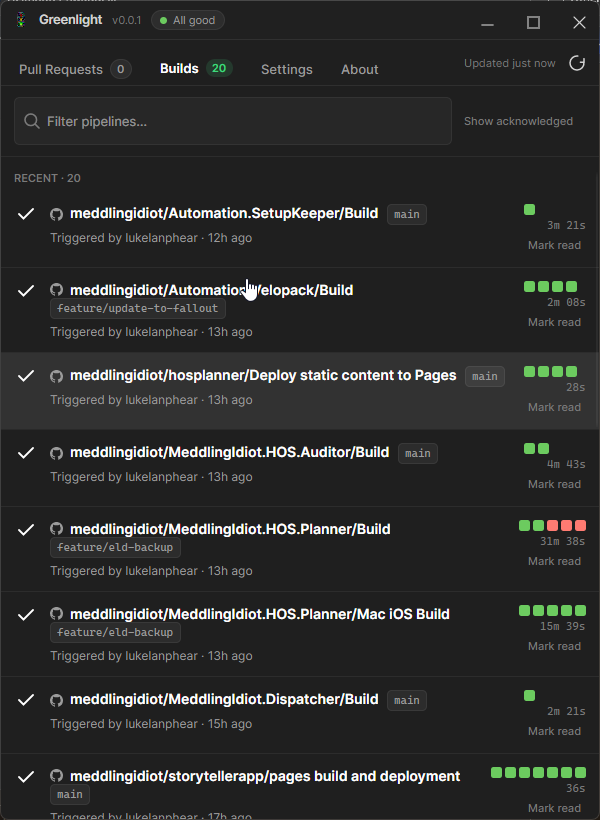
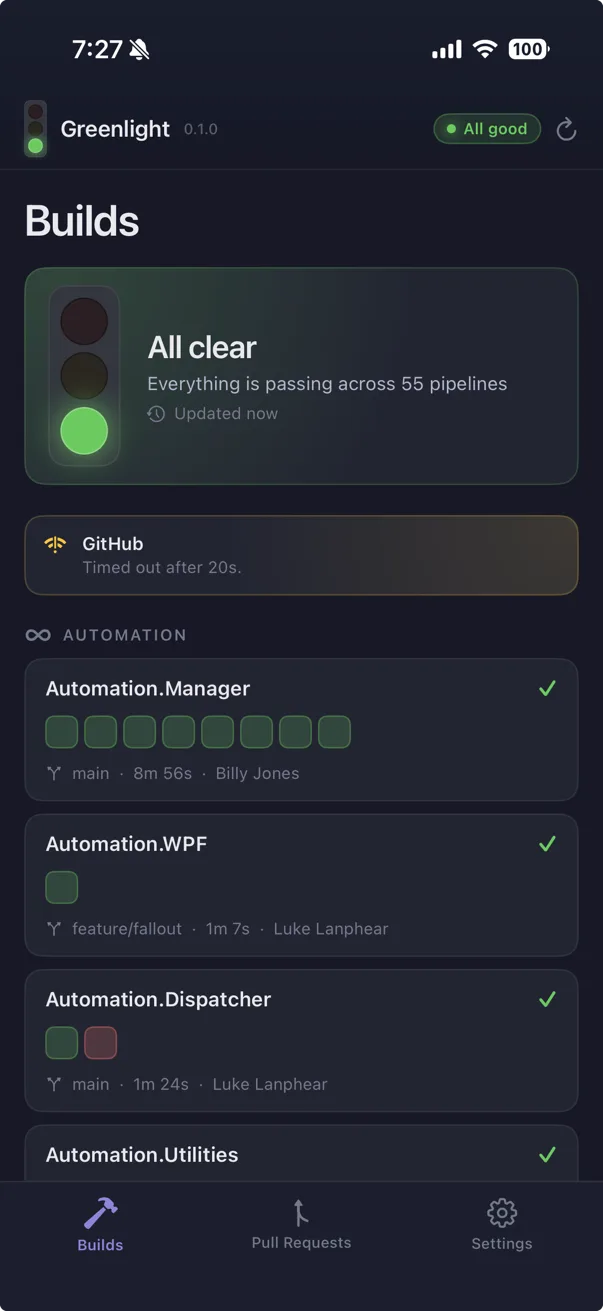
More than is on this page. A web browser that hides behind a fully working calculator, a seaside face-in-hole board that runs on a phone camera, a card trick whose flash goes off at deliberately the wrong moment, a Sokoban game with unlimited undo, a Rider plugin that colours brackets by nesting depth, a tray launcher, an assessment studio that grades scanned paper for teachers, and a quantity of build automation nobody asked for. Richelle has seen all of them, and three never got past her: the Sokoban game, on the grounds that the world already has enough of those; the calculator with the encrypted safe hidden behind it; and the seaside board, which I maintain had real promise and which is the one that still stings. You are looking at the survivors.
Where does my data go?
+
Your data — books, trips, logs, settings — stays on your device. No server, no analytics, no cloud sync. The one exception is this website: downloading an installer needs a free account, so we hold your email address, whether you asked for product updates, and a line saying which installer you took and when. That's the entire list, it is never shared with anyone, and deleting your account deletes it. I don't want your data — I have enough of my own problems.
Are the rules and recognition actually correct?
+
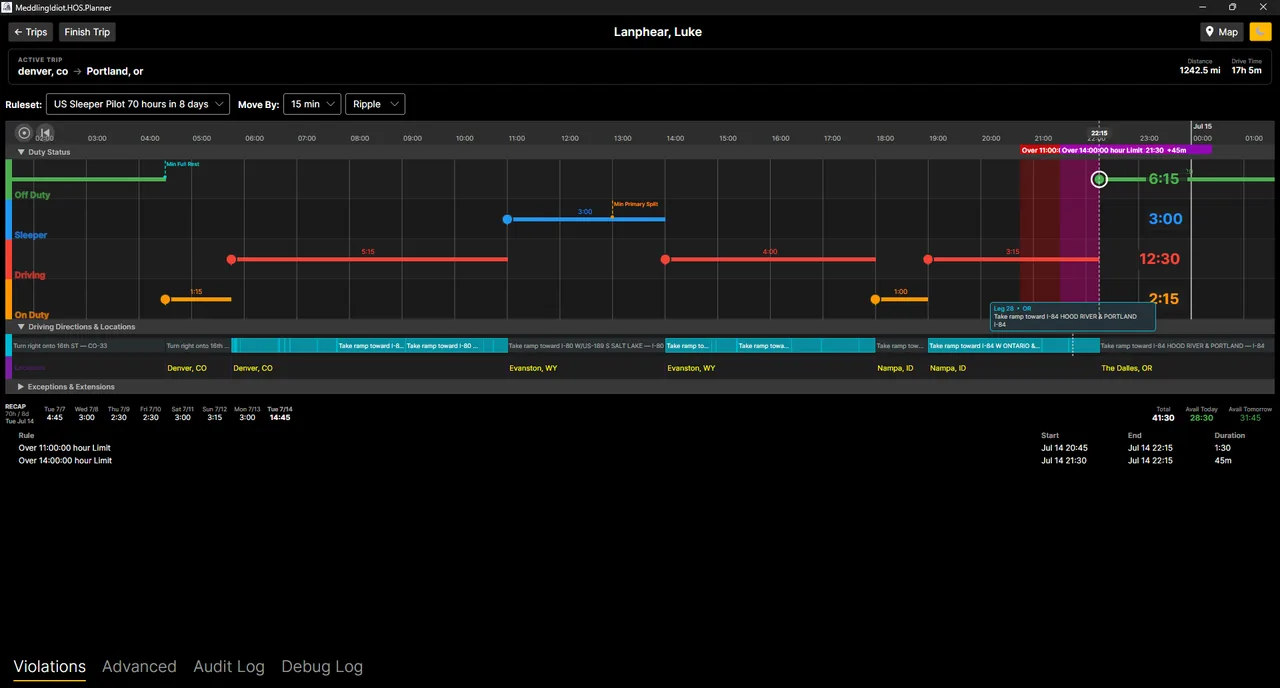
The HOS engine has been written by the same person three times and has, on occasion, out-argued a DOT officer about that officer's own regulation. The recognition engine finds a field on a scanned page by registration mark rather than by hope, and OnLocation works out sunrise from each pin's own latitude instead of the nearest city's. All three are the sort of thing that is either right or embarrassing, so they get tested harder than the parts you can see. That said: I'm a developer, not your compliance attorney — verify anything that actually matters against the current regulation or a qualified professional. But the engines themselves? They're probably fine.
Who works here?
+
Two of us. I write the code; my wife Richelle decides whether it was worth writing, what it costs, and whether anyone hears about it. That is the entire org chart. Hello.
Do you have a marketing department?
+
We do now. She's nicer than me, which is the whole strategy. Previously this FAQ boasted about not having one, which was easier to say when nobody was doing the job.